We deliver to you Mon-Fri from 8:00 to 18:00

Your Cart
Add £100.00 to cart and get free shipping!
No products in the cart.
Free Shipping on All Orders Over £100
Add £100.00 to cart and get free shipping!
No products in the cart.
Free Shipping on All Orders Over £100
Currently trending on Sitex Direct
Popular products with our buyers
Soon stocks will run out
Dont miss this opportunity while supplies last.

⚙️ Abrasives Selection Guide — UK Cutting, Grinding & Disc Safety
A UK guide to abrasives — cutting, grinding and flap discs, sanding abrasives, diamond blades, grit grades, bonded vs coated, disc markings, expiry dates, and safe use.
Abrasives are the consumables that do the actual cutting, grinding, and finishing across almost every trade — and they are also among the most hazardous items in the toolbox. A cutting disc spinning at 80 metres per second stores enormous energy, and if it is the wrong type, fitted incorrectly, used past its expiry, or run on the wrong tool, it can shatter and send fragments out at lethal speed. Angle grinders and the discs they spin cause some of the most severe injuries in UK industry. Choosing the right abrasive, for the right material, on the right machine, and using it within its limits, is both a productivity decision and a serious safety one.
The abrasives category is vast — cutting discs, grinding discs, flap discs, sanding belts and sheets, wire brushes, diamond blades, and more, in a wide range of materials, grit grades, and bond types. Matching the abrasive to the job is what separates fast, clean, safe work from slow, poor, dangerous work. And because abrasives are consumables bought repeatedly, getting the selection right also has a real cumulative cost impact.
This guide covers the UK safety framework for abrasives, the main abrasive types and their uses, the distinction between bonded and coated abrasives, grit grades, disc markings and the critical expiry date, abrasive grain materials, mounting and machine compatibility, safe use, sector-specific selection, and the common mistakes that cause poor results and serious injuries.
Why Abrasive Selection and Safety Matter
Abrasive discs are unforgiving of error. A bonded cutting or grinding disc that is cracked, expired, over-speeded, used for the wrong task (such as grinding with a thin cutting disc), or subjected to side-loading can burst — and a burst disc fragment leaving a grinder at full speed can cause catastrophic or fatal injury. Beyond bursting, abrasives cause injury through kickback, sparks (fire and burns), and the dust they generate (silica from masonry, metal dust). The wrong abrasive also simply does poor work — wrong grit leaves a poor finish, wrong bond wears out instantly or glazes over, wrong disc for the material cuts slowly and dangerously.
For UK users, abrasive use falls under PUWER 1998 (suitable, maintained equipment and safe use), the Provision and Use regulations’ specific requirements around abrasive wheels (mounting by trained, competent people), COSHH (dust), and the general HSWA duty. The combination of high injury severity and high usage volume makes abrasives a category where knowledge directly prevents harm.
The UK Safety Framework
Provision and Use of Work Equipment Regulations 1998 (PUWER)
Covers abrasive wheels specifically — they must be suitable, correctly mounted, guarded, and used safely. PUWER replaced the old Abrasive Wheels Regulations but the core duties carry through: abrasive wheels must be mounted by a trained, competent person, run within their maximum speed, correctly guarded, and inspected.
HSE Guidance on Abrasive Wheels
HSE provides specific guidance on the safe use of abrasive wheels — covering mounting, speed, guarding, PPE, and the training competent persons need. A key UK reference.
Control of Substances Hazardous to Health 2002 (COSHH)
Abrasive cutting and grinding generate hazardous dust — respirable crystalline silica from masonry and stone (a serious lung hazard), and metal dusts. COSHH requires dust control (extraction, suppression, RPE).
Control of Vibration / Noise at Work Regulations 2005
Grinding and cutting are high-vibration, high-noise operations — HAVS and hearing risks managed through tool / abrasive selection, exposure limits, and PPE.
Abrasive Wheel Training
Anyone mounting abrasive wheels must be trained and competent (a specific recognised training requirement) — covering wheel selection, inspection, mounting, speed, and guarding.
Bonded vs Coated Abrasives
The two fundamental abrasive families:
Bonded Abrasives
Abrasive grain bonded together into a solid shape — discs, wheels, and stones. The bond (resin, vitrified, etc.) holds the grain and wears away to expose fresh grain. Includes cutting discs, grinding discs, mounted points, and bench grinder wheels. Bonded abrasives are the ones that can burst dangerously, so they carry the most safety significance.
Coated Abrasives
Abrasive grain bonded onto a flexible backing (paper, cloth, film) — sandpaper, sanding belts, sanding discs, and flap discs (which bridge the categories). Used for sanding and finishing. Lower burst risk than bonded discs, but still subject to tearing and the dust hazard.
Main Abrasive Types
Cutting Discs (Bonded)
Thin bonded discs for cutting metal, stone, or concrete. Designed for cutting on the edge only — NEVER for grinding on the face (side-loading a thin cutting disc is a classic cause of disc burst). Available for metal, stainless (inox — iron/sulphur/chlorine-free to avoid contaminating stainless), and stone/concrete. Thin discs (1–1.6 mm) cut fast with less material loss.
Grinding Discs (Bonded)
Thicker bonded discs (typically 6 mm+) for grinding and material removal on the face — weld dressing, deburring, edge preparation. Designed to take face pressure. Not for cutting.
Flap Discs (Coated)
Overlapping flaps of coated abrasive on a backing plate — combining grinding and finishing in one disc. Versatile for weld blending, finishing, and light stock removal, leaving a better finish than a grinding disc. Available in various grits and flap configurations.
Sanding Discs and Sheets (Coated)
Coated abrasive for sanding — random-orbital discs (hook-and-loop), sheets for orbital and hand sanding, in a wide grit range for everything from heavy stock removal to fine finishing.
Sanding Belts (Coated)
Continuous loops for belt sanders — fast stock removal and finishing on timber and metal.
Diamond Blades
Steel blades with a diamond-impregnated edge for cutting hard materials — concrete, stone, tile, masonry. Segmented (dry/general), continuous rim (wet, fine tile cuts), and turbo (fast, general). Far longer-lasting than abrasive stone discs for masonry cutting.
Wire Brushes / Wheels (Bonded-Type)
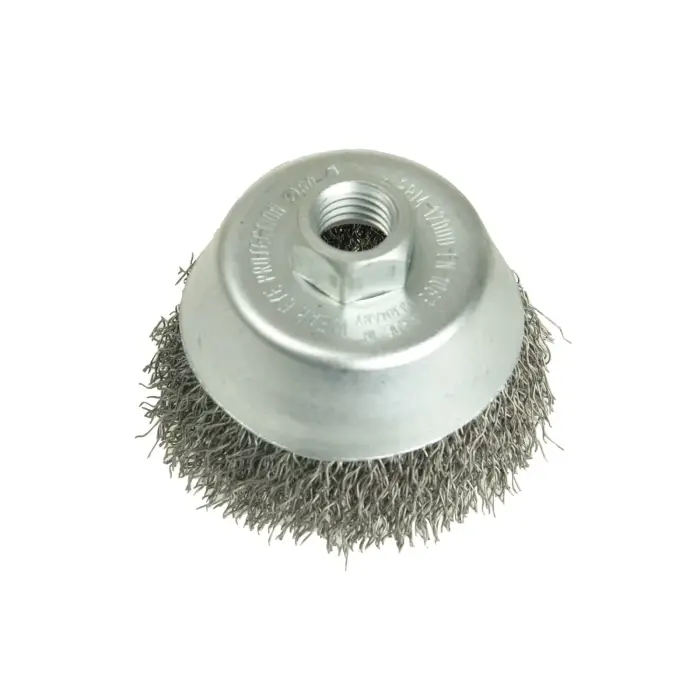
Wire cup brushes and wheels for rust and paint removal, cleaning, and surface preparation — their own hazards (flying wire fragments, snagging).
Mounted Points and Burrs
Small bonded points and carbide burrs for die grinders — detail grinding and shaping.
Bench Grinder Wheels (Bonded)
Vitrified wheels for bench grinders — tool sharpening and grinding, with specific mounting, balancing, and rest-gap requirements.
Grit Grades
Grit number indicates the abrasive grain size — lower numbers are coarser (faster, rougher), higher numbers finer (slower, smoother). The grit governs the finish and the rate of material removal:
- Coarse (e.g. 24–60 grit): Heavy stock removal, weld dressing, paint stripping, levelling — fast but rough.
- Medium (e.g. 80–120 grit): General sanding, preparation, smoothing after coarse work.
- Fine (e.g. 150–240 grit): Finishing, smoothing before coating, fine preparation.
- Very fine / ultra-fine (e.g. 320–1000+ grit): Final finishing, between-coat sanding, polishing preparation.
The principle is to work through progressively finer grits — starting coarse to remove material and refine the surface, then stepping up through the grits to the desired finish, removing the scratches left by each previous grit. Skipping grit steps leaves scratches that fine grits can’t remove efficiently.
Abrasive Grain Materials
- Aluminium oxide: The general-purpose workhorse grain — metal, wood, general use. Durable and versatile.
- Zirconia (zirconium) alumina: Tougher, self-sharpening grain for aggressive metal grinding and high-pressure work — longer-lasting on hard materials.
- Ceramic: The highest-performance grain — self-sharpening, cool-cutting, long-lasting, for demanding metal work and stainless. Premium-priced.
- Silicon carbide: Hard, sharp grain for stone, glass, masonry, non-ferrous metals, and fine finishing.
- Diamond: The hardest — for cutting concrete, stone, tile, and very hard materials.
- Garnet: Natural grain traditional for woodworking.
Disc Markings and the Critical Expiry Date
Every bonded abrasive disc carries essential markings that must be read and respected:
- Maximum operating speed: Stated in RPM and/or m/s — the disc must NEVER be run faster than this. The tool’s speed must not exceed the disc’s rating (a disc run over-speed is a primary burst cause).
- Disc diameter and bore: Must match the machine and guard.
- Disc thickness: Indicating cutting (thin) vs grinding (thick).
- Material suitability: Metal, stone/masonry, stainless (inox), etc.
- Safety pictograms: Mandatory PPE, and the crucial “do not use for side grinding” symbol on cutting discs.
- Standards marking: Conformance to the relevant safety standard (e.g. EN 12413 for bonded abrasives, oSa certification — the Organisation for the Safety of Abrasives mark indicating tested, safe products).
- EXPIRY DATE: Bonded abrasive discs have a shelf life — typically 3 years from manufacture for resin-bonded discs. The expiry date (often shown as a manufacture date stamp plus the shelf life, or a use-by) MUST be checked. The resin bond degrades over time, and an expired disc is at increased risk of bursting. Expired discs must be discarded, not used.
Mounting and Machine Compatibility
- Speed match: The disc’s maximum RPM must be equal to or greater than the machine’s speed — never run a disc on a faster machine.
- Size and bore: Disc diameter, thickness, and bore must match the machine, flanges, and guard.
- Correct flanges: Use the correct, matching, undamaged flanges — they support the disc and distribute clamping force.
- Guard fitted and adjusted: The guard must be in place and positioned between the disc and the operator — never removed.
- Competent mounting: Abrasive wheels must be mounted by a trained, competent person (a specific PUWER requirement for abrasive wheels).
- Inspection before fitting: Check the disc for cracks, damage, and expiry; ring-test vitrified wheels where applicable.
- Run-up: After fitting, run the machine up to speed in a safe position before applying to work, in case of a faulty disc.
Safe Use
- Use cutting discs for cutting only; grinding discs for grinding only — never side-load a cutting disc
- Let the disc do the work — don’t force it (forcing causes heat, kickback, and burst risk)
- Maintain control and a firm grip — anticipate kickback
- Full PPE: eye protection (impact-rated), face shield for grinding, hearing protection, gloves, RPE for dust, FR clothing where sparks are heavy
- Dust control — extraction or suppression for masonry/stone (silica), metal dust capture
- Spark awareness — fire risk; clear flammables, have a fire response ready (hot work)
- Keep guards fitted and positioned correctly
- Never exceed the disc’s rated speed
- Replace worn discs — a disc worn near its limit is inefficient and can be unsafe
- Store discs flat, dry, and undamaged, away from damp and extremes that degrade the bond
Sector-Specific Selection
Metal Fabrication / Welding
Inox cutting discs for stainless, zirconia/ceramic grinding and flap discs for weld dressing, wire brushes for cleaning. Ceramic grain for productivity on hard metals.
Construction / Groundworks
Diamond blades for concrete, stone, and masonry cutting (far better than abrasive stone discs); stone cutting discs for occasional work; dust suppression essential (silica).
Joinery / Woodworking
Coated abrasives — sanding belts, discs, sheets, flap discs — in a grit progression; aluminium oxide and garnet grains; dust extraction.
Tiling / Stone
Diamond blades (continuous rim wet for fine cuts), diamond cutting discs, silicon carbide for finishing.
Automotive / Bodywork
Sanding discs and sheets in fine grit progression, flap discs, cutting discs for metal, surface conditioning discs.
General Maintenance
A versatile mix — metal cutting and grinding discs, flap discs, sanding sheets, wire brushes, a diamond blade for occasional masonry.
Engineering / Toolmaking
Bench grinder wheels, mounted points, fine abrasives, precision finishing abrasives.
Common Mistakes
Using a Cutting Disc for Grinding
Side-loading a thin cutting disc to grind on its face is a classic, dangerous error — the disc isn’t built for side force and can shatter. Use a grinding disc for grinding.
Ignoring the Expiry Date
Resin-bonded discs degrade over time (typically 3-year shelf life) and an expired disc has increased burst risk. Check the expiry / manufacture date and discard expired discs.
Over-Speeding a Disc
Running a disc on a machine faster than the disc’s rated maximum RPM — a primary cause of disc burst. The machine speed must never exceed the disc rating.
Removing the Guard
Taking off the grinder guard “to get access” removes the barrier that protects against a burst disc and sparks — a leading factor in severe grinder injuries.
Using a Cracked or Damaged Disc
A disc with any crack or damage can burst in use. Inspect every disc before fitting and discard damaged ones.
Wrong Disc for the Material
A metal disc on stone, or a standard disc on stainless (contaminating it), gives poor, slow, hot, dangerous results. Match the disc to the material (use inox for stainless, diamond for masonry).
No Dust Control on Masonry
Cutting concrete and stone without dust suppression or extraction exposes the user to respirable crystalline silica — a serious, irreversible lung hazard. Use water suppression or extraction and RPE.
Skipping Grit Steps
Jumping from coarse to fine grit leaves deep scratches the fine grit can’t efficiently remove. Work progressively through the grits.
Forcing the Tool
Pushing hard to cut faster generates heat (damaging disc and work), increases kickback, and raises burst risk. Let the abrasive do the work at its own rate.
Untrained Mounting
Abrasive wheels mounted by untrained people — wrong flanges, wrong speed, missed cracks. PUWER requires competent, trained mounting of abrasive wheels.
Poor Storage
Discs stored damp, bent, or in extremes degrade the bond and warp — store flat, dry, and protected.
Conclusion
Abrasives are where the work actually gets cut, ground, and finished — and where some of the most severe trade injuries happen. Getting selection right means matching the abrasive type (cutting vs grinding vs flap vs coated vs diamond), the grain material, and the grit to the material and task; and getting safety right means respecting the disc markings absolutely — the maximum speed, the material suitability, the “no side grinding” rule, and the often-overlooked expiry date — while keeping guards on, mounting competently, controlling dust, and wearing the right PPE.
What separates fast, clean, safe abrasive work from poor and dangerous work is respecting both the performance and the safety sides: choose the right abrasive for the material and finish, buy oSa-certified quality, check the expiry, never over-speed or side-load, keep the guard on, control the silica and metal dust, and have abrasive wheels mounted only by trained people. Treat the spinning disc with the respect its stored energy demands, and abrasives become what they should be — the productive, precise consumables at the cutting edge of the work, rather than the cause of the next serious injury.
Frequently Asked Questions
Can I use a cutting disc for grinding?
No — this is one of the most dangerous and common abrasive errors. Cutting discs are thin and designed to cut on the edge only; they are not built to withstand side (face) pressure. Using a cutting disc for grinding side-loads it in a way it can’t handle, and it can shatter at high speed, sending fragments out with potentially fatal force. Cutting discs carry a specific “do not use for side grinding” safety pictogram for exactly this reason. Use a proper grinding disc (thicker, designed for face pressure) for grinding, and a cutting disc only for cutting on its edge. Mixing the two is a leading cause of severe angle grinder injuries.
Do abrasive discs have an expiry date?
Yes — bonded abrasive discs, particularly resin-bonded cutting and grinding discs, have a shelf life, typically 3 years from the date of manufacture. The resin bond that holds the abrasive grain together degrades over time, and an expired disc has an increased risk of bursting in use. Every disc carries a manufacture date or expiry marking that must be checked before use — expired discs must be discarded, not used, regardless of how they look. This is one of the most overlooked aspects of abrasive safety; discs sitting in a van or store for years past their date are a real hazard. Diamond blades and coated abrasives don’t degrade the same way, but resin-bonded discs absolutely do.
What is the oSa mark on abrasives?
oSa stands for the Organisation for the Safety of Abrasives, a body whose members commit to manufacturing abrasives to recognised safety standards. The oSa mark on a disc indicates it has been made by a member committed to those safety requirements and tested accordingly — effectively a quality and safety assurance that the disc meets the relevant standards (such as EN 12413 for bonded abrasives). For UK buyers, choosing oSa-certified abrasives is a sensible way to ensure you’re using tested, safety-conscious products rather than cheap, uncertified discs of unknown quality — important given that abrasive disc failures can be catastrophic. Look for the oSa mark alongside the standards marking, speed rating, and expiry date.
What’s the difference between bonded and coated abrasives?
Bonded abrasives have the abrasive grain bonded together into a solid shape — cutting discs, grinding discs, mounted points, and bench grinder wheels. The bond wears away to expose fresh grain, and these are the abrasives that can burst dangerously, carrying the most safety significance (speed ratings, expiry dates, guarding). Coated abrasives have the grain bonded onto a flexible backing — sandpaper, sanding belts, sanding discs, and flap discs — used for sanding and finishing. Coated abrasives have a much lower burst risk than bonded discs, though they still tear and generate hazardous dust. In short: bonded = solid discs/wheels for cutting and grinding (high safety significance); coated = flexible-backed abrasives for sanding and finishing.
What do the grit numbers on abrasives mean?
The grit number indicates the size of the abrasive grain: lower numbers are coarser (larger grain, faster and rougher material removal) and higher numbers are finer (smaller grain, slower and smoother). Coarse grits (around 24–60) are for heavy stock removal, weld dressing, and paint stripping; medium grits (80–120) for general sanding and preparation; fine grits (150–240) for finishing and smoothing before coating; and very fine grits (320–1000+) for final finishing and polishing preparation. The key technique is to work progressively through the grits — start coarse to remove material, then step up through finer grits to remove the scratches left by each previous grit and reach the desired finish. Skipping grit steps leaves deep scratches that finer grits can’t efficiently remove.
Why must abrasive wheels be mounted by a trained person?
Because incorrect mounting is a major cause of abrasive wheel bursts, which can be fatal. Under PUWER 1998 (carrying through duties from the former Abrasive Wheels Regulations), abrasive wheels must be mounted by someone trained and competent to do so. Correct mounting involves selecting the right wheel for the machine and task, checking the wheel’s maximum speed against the machine speed, inspecting the wheel for cracks and damage (and ring-testing vitrified wheels), using the correct undamaged flanges to support and clamp the wheel properly, fitting and adjusting the guard, and running the machine up to speed safely before use. Each of these steps prevents a specific failure mode. An untrained person can easily fit the wrong wheel, over-speed it, use damaged flanges, or miss a crack — any of which can cause a burst.
What’s the danger from cutting concrete and stone?
Beyond the disc-burst and kickback risks common to all abrasive cutting, cutting concrete, stone, and masonry releases respirable crystalline silica dust — fine particles that penetrate deep into the lungs and cause silicosis, lung cancer, and COPD with prolonged exposure. It’s one of the most serious long-term health hazards in UK construction. Dry-cutting masonry with an abrasive or diamond disc generates enormous quantities of this dust. The controls are essential: use water suppression (wet cutting) or on-tool dust extraction to capture the dust at source, wear appropriate respiratory protection (RPE), and follow COSHH requirements. Diamond blades are also preferable to abrasive stone discs for masonry — they cut faster and last far longer — but the silica dust hazard applies regardless of disc type, so dust control is non-negotiable.
How should I store abrasive discs?
Store bonded abrasive discs flat, dry, and protected from damage and extremes. Damp degrades the resin bond and can cause discs to warp or weaken; storing discs bent, leaning, or with weight on them can warp or crack them; and temperature extremes degrade the bond over time. Keep discs in their original packaging where possible, lying flat in a dry store at moderate temperature, away from the damp of a van floor or unheated shed. Damaged, warped, or cracked discs must be discarded, not used. Good storage also makes it easier to track the expiry date — keeping discs organised by type and date means you use the oldest first and don’t accidentally reach for an expired disc. Proper storage protects both the performance and the safety of the abrasives.